What counts as PII
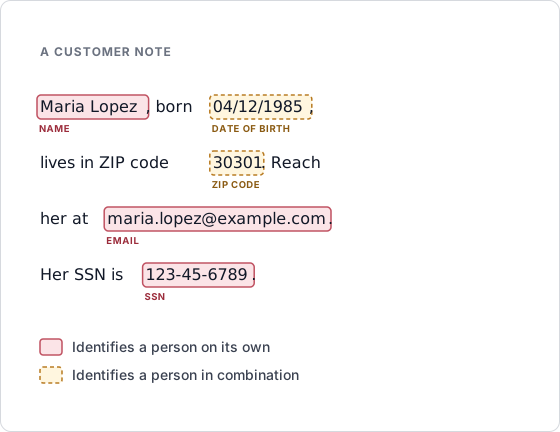
PII is any information that identifies a person on its own or in combination with other data. Some of it is direct, such as names, Social Security numbers, email addresses, phone numbers, and account and card numbers. Some of it identifies a person only in combination, such as a date of birth with a ZIP code. Which of these a law cares about depends on the law, and health and financial data carry their own definitions as PHI and NPPI. PII vs PHI vs NPPI explains how the three overlap, and what is PII covers PII itself in depth.
Where redaction runs matters
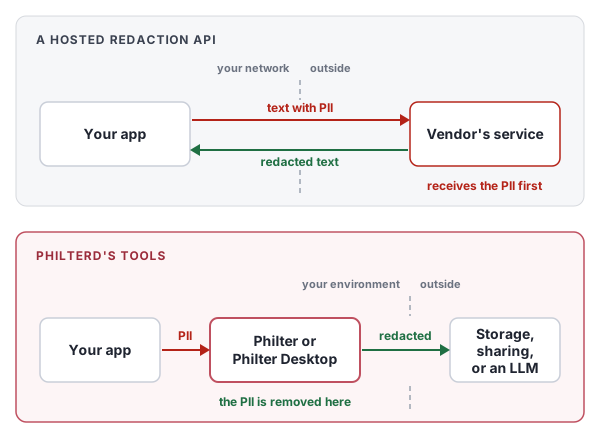
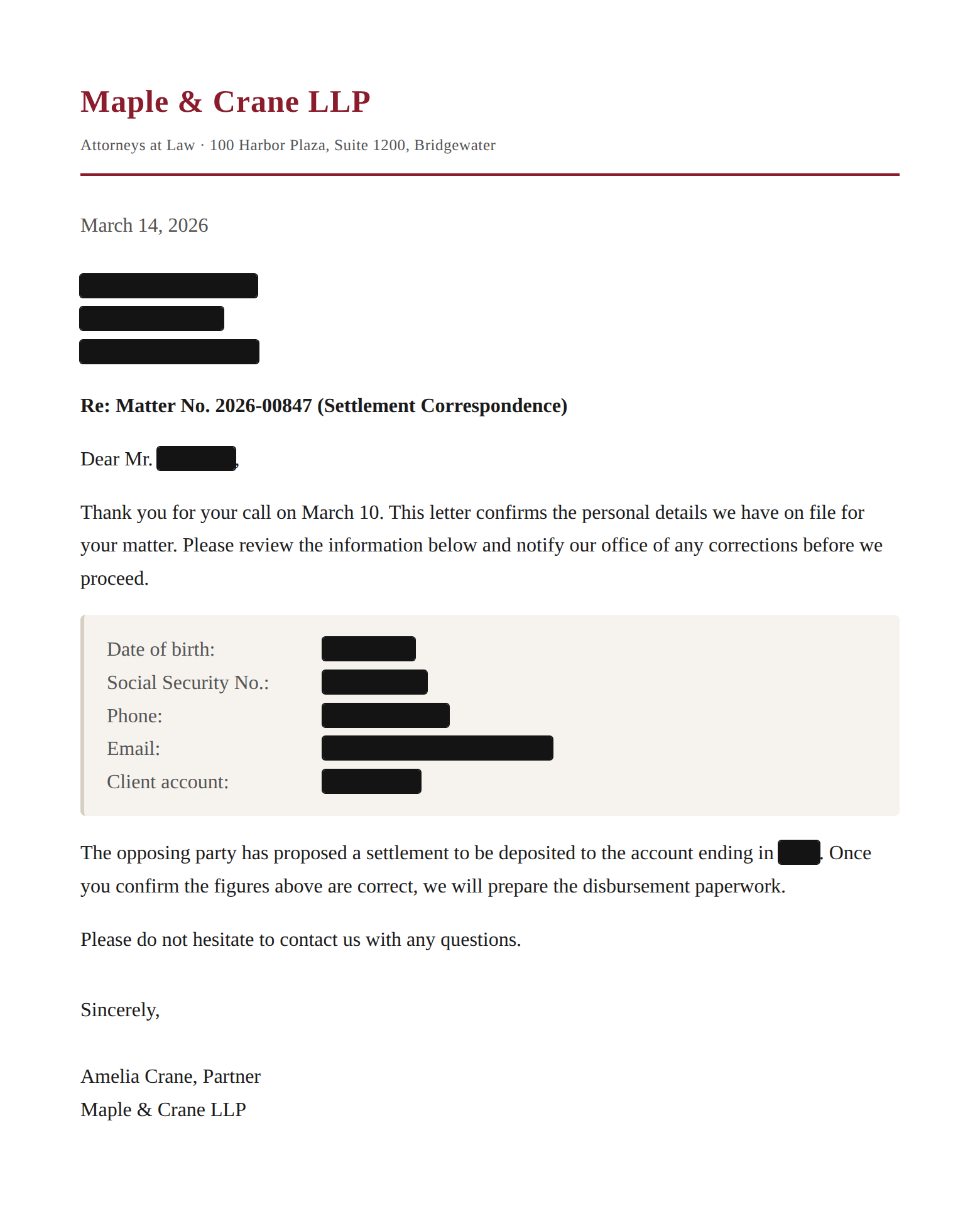
PII redaction finds personally identifiable information in text and documents and removes or replaces it, so the data can be stored, shared, or analyzed with less exposure. Philterd’s open source tools do it where your data already is, in your own cloud or on your own Windows PC.
A hosted redaction service receives the PII before anything is removed, so the exposure has already happened by the time the text comes back. Philterd’s tools run inside your environment, and the detection logic is open source, so your security team can read exactly what it does.
Redact PII in your pipelines and APIs with Philter
Philter is a self-hosted PII redaction API. Your services send it text and get redacted text back, and it runs inside your own cloud or data center, so the text is never sent to a third party. Philter finds PII with pattern-based detectors for structured identifiers such as SSNs, card numbers, and IBANs, and with a trained model for names, which no pattern can reliably match. It redacts text and PDFs.
A policy decides what Philter looks for and what it does with each match. It can redact a value, mask it, keep its last four digits, hash it, encrypt it, or replace it with a fake value of the same type. The encryption strategies can be reversed later through Philter’s audited re-identification endpoints. The general-purpose starter policy covers common PII types, and the policy library has policies for GDPR, CCPA, GLBA, and other frameworks to start from.

Philter is free to self-host under the Apache License, Version 2.0. It is also available from the AWS, Google Cloud, and Azure marketplaces, from $0.49 an hour for 4 vCPU on AWS, billed through your existing cloud account. Deploy Philter in your cloud to launch it in your own account.
Redact PII in documents on your PC with Philter Desktop
Philter Desktop is for individuals and small offices that need to redact documents rather than build a pipeline. It is a Windows app that redacts PDF, Word, Excel, CSV, text, rich text, and email files, and it reads scanned PDFs with on-device OCR so text in a scan can be redacted too. There is no server to run, no command line to learn, and no cloud account to create.
Every document is redacted on your own computer, and nothing is uploaded. You can preview what will be redacted before saving, and Philter Desktop also removes the hidden data ordinary redaction leaves behind, such as Office metadata, comments, tracked changes, and email headers. It is free for personal and evaluation use and $199 per user per year for commercial use. Download Philter Desktop to try it on your own files.
Which one fits
Philter and Philter Desktop solve the same problem for different people. Pick the one that matches who does the redacting and where the data lives.
For engineering and data teams
Philter
- Redacts
- Text and PDFs sent to its API
- Runs
- In your cloud or data center
- You use it
- As a REST API, called from your services and pipelines
$0.49 / hour for 4 vCPU on your cloud marketplace
Free to self-host. Open source under Apache 2.0.
For individuals and small offices
Philter Desktop
- Redacts
- PDF, Word, Excel, CSV, text, and email files, including scanned PDFs
- Runs
- On your Windows PC, fully offline
- You use it
- As a desktop app, with a watched folder and command line for batches
$199 / user / year for commercial use
Free for personal and evaluation use. Open source under Apache 2.0.
Developers who want redaction inside their own application can embed Phileas, the open source library underneath Philter, in Java, Python, or .NET. It uses the same policies as Philter, so a policy written for one works in the other.
Measure it on your own data
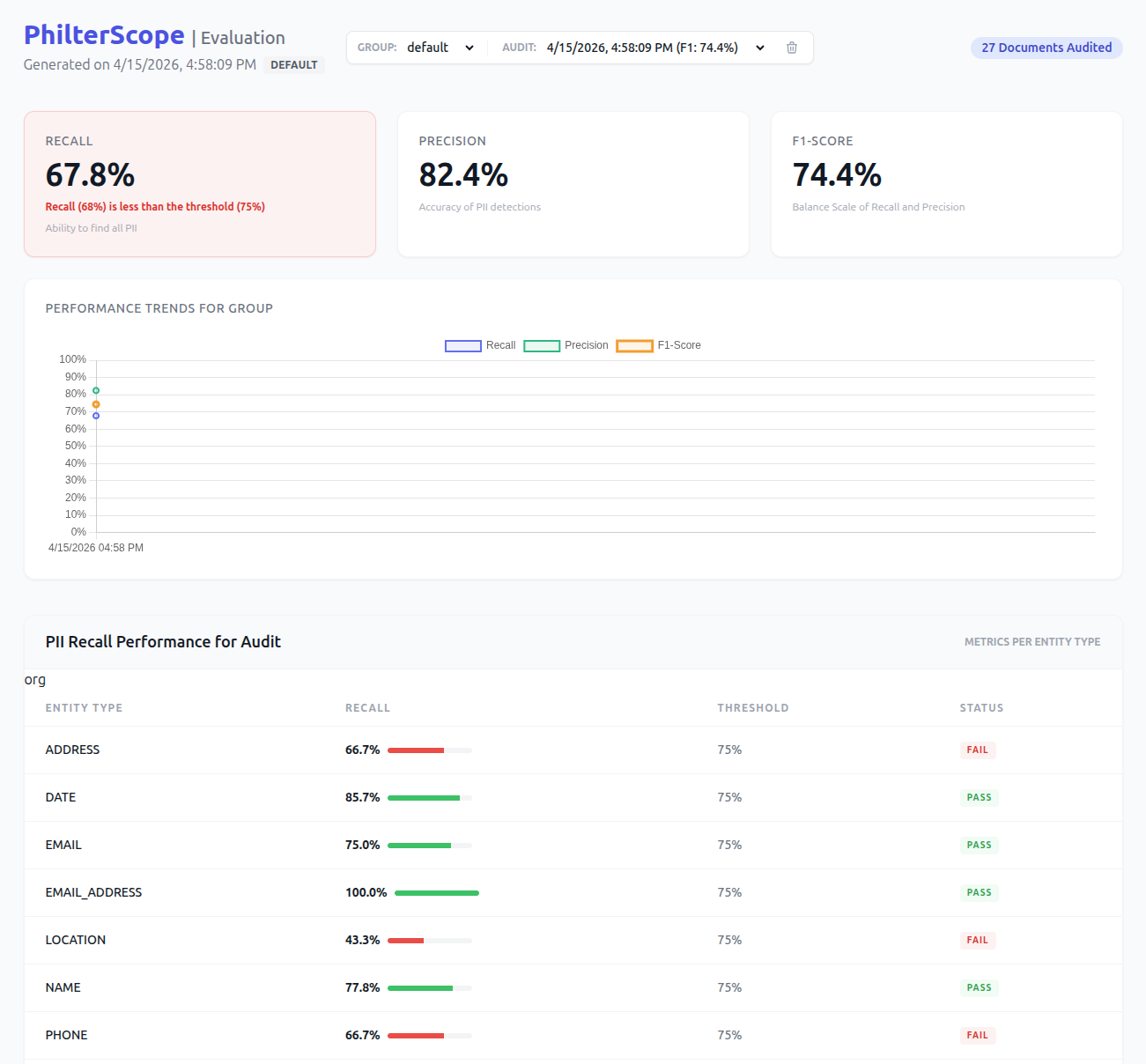
Detection is probabilistic, so no redaction tool finds every instance of PII. How well a policy works depends on your data, and it should be measured on that data before you rely on it. Philter Scope scores a policy’s precision and recall against a gold-standard set you label, so you can see what a policy change does before it reaches production. If you want help designing or measuring a redaction pipeline, our consulting services cover that work.
Sending prompts to an LLM? Philter AI Proxy redacts PII from prompts before they leave your network.